
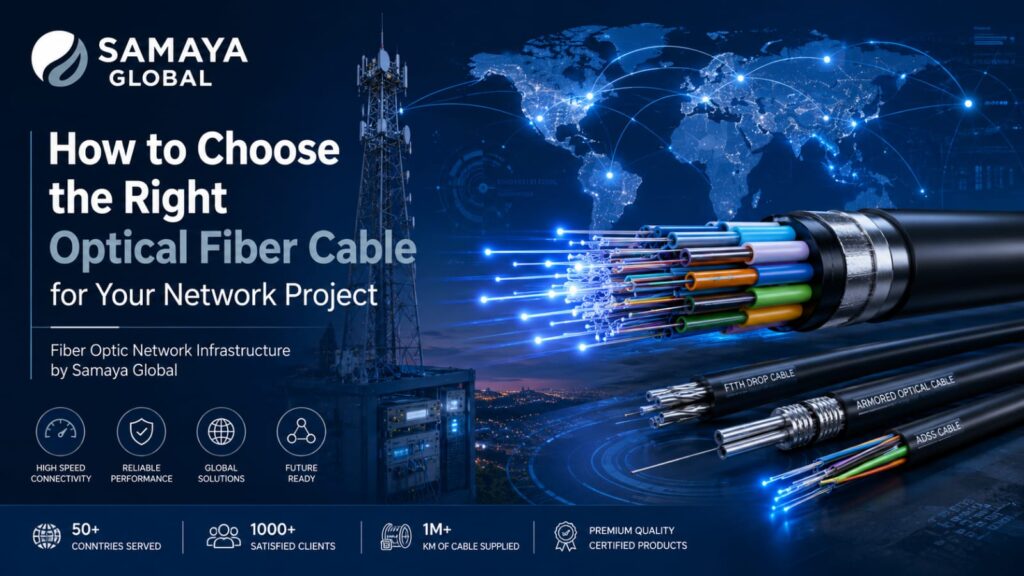
How to Choose the Right Optical Fiber Cable for Your Network Project
Introduction
In today’s connected world, optical fiber cables form the backbone of modern communication networks. Whether you’re building a telecom infrastructure, expanding an FTTH network, connecting industrial facilities, or developing a data communication system, choosing the right optical fiber cable is crucial for ensuring performance, reliability, and long-term scalability.
With various cable types, specifications, and installation requirements available, selecting the most suitable solution can be challenging. This guide will help you understand the key factors to consider when choosing an optical fiber cable for your network project.
Understanding Optical Fiber Cables
Optical fiber cables transmit data using light signals instead of electrical signals, enabling faster data transfer, higher bandwidth, and lower signal loss over long distances.
These cables are widely used in:
FTTH (Fiber to the Home) networks
Telecommunications infrastructure
Data centers
Industrial communication systems
Enterprise networks
Smart city projects
Types of Optical Fiber Cables
- Single Mode Fiber (SMF)
Single Mode Fiber is designed for long-distance communication and high-speed data transmission.
Advantages:
Longer transmission distances
Lower signal attenuation
Higher bandwidth capacity
Ideal for telecom networks and FTTH projects
Applications:
Long-haul communication networks
Telecom backbone infrastructure
Internet service providers
Metropolitan area networks
- Multi Mode Fiber (MMF)
Multi Mode Fiber is designed for shorter transmission distances and local networking applications.
Advantages:
Cost-effective for short distances
Easier installation
Suitable for internal network connections
Applications:
Office buildings
Data centers
Campus networks
Industrial facilities
Key Factors to Consider Before Selecting an Optical Fiber Cable
- Network Distance Requirements
The first factor to evaluate is the transmission distance.
For projects covering several kilometers, Single Mode Fiber is typically the preferred choice due to its superior long-distance performance.
For shorter distances within buildings or campuses, Multi Mode Fiber can provide a more economical solution.
- Bandwidth Requirements
Consider the current and future bandwidth demands of your network.
High-speed applications such as:
Video streaming
Cloud services
5G infrastructure
Smart city deployments
require fiber cables capable of supporting growing data traffic efficiently.
- Installation Environment
Different environments require different cable constructions.
Indoor Applications
Suitable for:
Offices
Data centers
Commercial buildings
Outdoor Applications
Require:
UV-resistant jackets
Moisture protection
Enhanced durability
Underground Installations
Require:
Armored protection
Rodent resistance
Water-blocking features
- Mechanical Strength and Durability
Network infrastructure investments are long-term assets. Choosing cables with strong protective layers ensures durability and minimizes maintenance costs.
Look for features such as:
Armored construction
Crush resistance
Tensile strength
Environmental protection
- Compliance with Industry Standards
Always select optical fiber cables that comply with recognized international standards.
Common standards include:
ITU-T Standards
IEC Standards
ISO Certifications
RoHS Compliance
Compliance ensures quality, performance, and compatibility with global telecom infrastructure.
- Scalability for Future Expansion
Many network projects underestimate future growth.
When selecting optical fiber cables, consider:
Additional bandwidth requirements
Expansion of network coverage
Future technology upgrades
Investing in scalable fiber infrastructure today can significantly reduce future upgrade costs.
Common Mistakes to Avoid
Choosing Based Only on Price
Low-cost cables may result in poor performance, higher maintenance expenses, and reduced network reliability.
Ignoring Environmental Conditions
Using indoor cables in outdoor environments can lead to premature failure and costly replacements.
Overlooking Future Capacity
Always plan for future bandwidth demands rather than current requirements alone.
Selecting Unverified Suppliers
Work with trusted suppliers who can provide quality assurance, technical documentation, and consistent product performance.
Why Quality Matters in Optical Fiber Networks
A reliable optical fiber cable directly impacts:
Network uptime
Data transmission quality
Installation efficiency
Long-term operational costs
Customer satisfaction
High-quality fiber solutions help businesses achieve better performance while reducing maintenance and downtime.
Choosing the Right Supplier
Beyond selecting the right cable type, partnering with an experienced supplier is equally important.
A reliable supplier should offer:
Consistent product quality
Technical support
International quality standards
Timely delivery
Competitive pricing
The right supplier becomes a valuable partner in the success of your network infrastructure projects.
Conclusion
Choosing the right optical fiber cable is one of the most important decisions in any network project. Factors such as transmission distance, bandwidth requirements, installation environment, durability, and future scalability all play a critical role in determining the best solution.
By carefully evaluating your project needs and sourcing products from a trusted supplier, you can build a reliable, high-performance network that supports long-term growth and operational efficiency.
Call to Action
Looking for reliable Optical Fiber Products and FTTH Drop Cables for your next project?
Samaya Global supplies high-quality telecom and industrial solutions designed to meet the evolving needs of modern communication networks.
Contact our team today to discuss your requirements and request a customized quotation.
Phone:+91 9619284242
Email:info@samayaglobal.com